You Don't Need Surgery Yet!! Here's What to Try First

By a Licensed Physical Therapist with Spine & Orthopedic Focus

You got your MRI results back. The report says something like "disc herniation at L4–L5" or "cervical disc bulge with nerve root compression" and suddenly the words surgery and operation are floating around in conversations you never expected to be having.
I want to stop you right there.In nearly a decade of treating spine patients, the question I hear most often and the one that carries the most fear is this:
Do I need surgery for my disc?
For most people, the honest answer is no. And the science backs that up.

What Is HNP (Disc Bulging), Really?

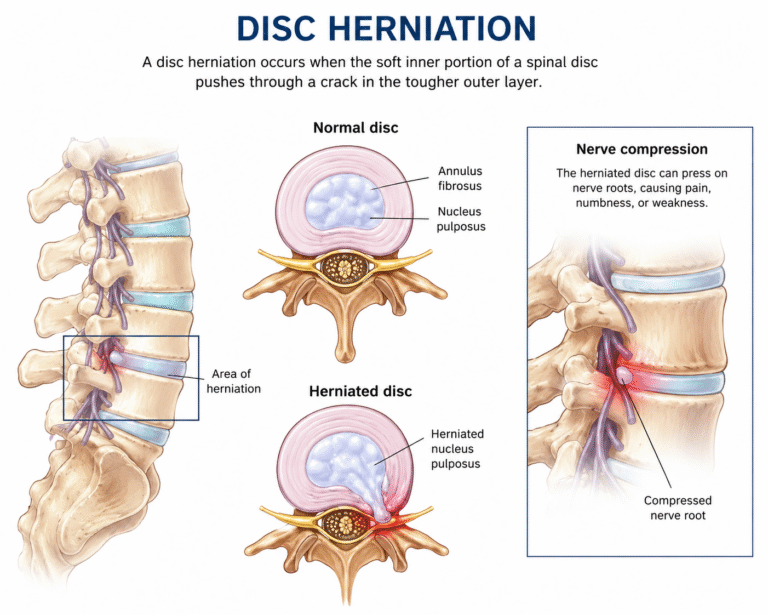
HNP stands for Herniated Nucleus Pulposus a term that sounds alarming but describes something that happens to millions of people every year. Between each vertebra in your spine sits a disc: a tough outer ring (the annulus fibrosus) with a soft, gel-like center (the nucleus pulposus). When that inner material pushes outward either bulging the outer ring or breaking through it, you have a disc herniation.

This can happen in the cervical spine (neck), causing pain, numbness, or weakness into the arms and hands. Or in the lumbar spine (lower back), causing the classic shooting pain, tingling, or weakness down the legs, what most people know as sciatica.

Here’s what most patients are never told: a disc bulge on an MRI is not a diagnosis of suffering. Research consistently shows that a significant percentage of people walking around right now have disc herniations visible on imaging and feel completely fine. The disc finding and your pain are related, but the disc alone does not determine your outcome.

What determines your outcome is how well your body responds to the right treatment.

The Good News Most People Never Hear: Discs Can Heal

This is the part I wish every newly diagnosed patient could hear before they ever stepped into a surgical consultation.Intervertebral discs have a remarkable capacity for what we call spontaneous resorption meaning the herniated material can actually shrink and be absorbed by the body over time.
Studies in peer-reviewed journals have shown resorption rates of up to 66–80% in lumbar herniations, and similar findings exist for cervical herniations.
The larger and more extruded the herniation, the more likely the body is to resorb it because the immune system recognizes the displaced material as foreign and works to clear it.
That process takes time, typically 6 to 12 weeks for meaningful improvement, and up to 6 months for full resolution.
But it happens. And the right rehabilitation program does not just manage your pain while you wait, it actively supports that healing process.
This is why rushing to surgery, especially in the first weeks after a disc injury, is rarely the right call.

A Patient I’ll Never Forget

Let me tell you about a patient I’ll call Sarah a 43 year old office administrator who came to me after two months of debilitating neck pain and a numbness that traveled from her right shoulder all the way into her thumb and index finger.

Her MRI showed a C5–C6 disc herniation with moderate nerve root compression. She had already seen a neurosurgeon, who told her that if her symptoms didn’t improve, a cervical discectomy and fusion would be the next step. She came to me looking for a second opinion and hoping there was another way.

When I assessed her, the picture was clear. Her deep neck flexors the small stabilizing muscles at the front of the cervical spine  were almost completely switched off.

Her upper trapezius and levator scapulae were locked in chronic spasm, compensating for everything the deeper muscles weren’t doing. She was holding her head forward about four centimeters past her center of gravity, a posture common in desk workers that puts enormous compressive load on the lower cervical discs.

We had work to do.

Over 10 weeks, we focused on two things:

1. Progressive therapeutic exercise — starting with gentle deep neck flexor activation and cervical retraction drills, then building toward scapular stabilization, thoracic mobility work, and postural retraining. For her lumbar spine health (she had a mild L5–S1 disc bulge as well, found incidentally), we layered in core stabilization and hip mobility work.

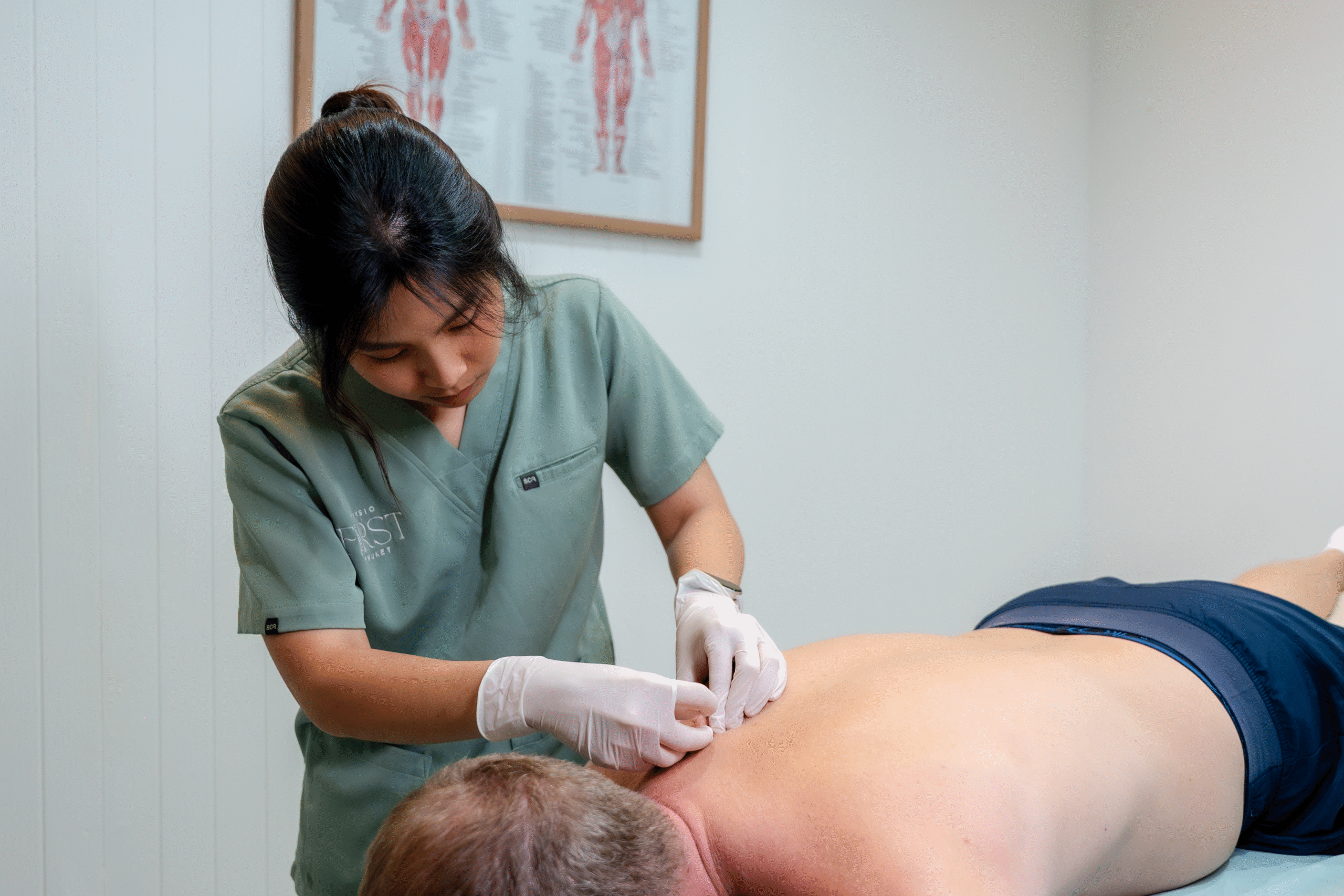
2. Acupuncture — twice weekly in the first month, then weekly as she progressed. I targeted points along the cervical paraspinals, upper trapezius, and the nerve distribution pathway of C6 the dermatome matching her symptoms. Within two weeks, the intensity of her arm numbness had dropped noticeably. By week five, it was intermittent rather than constant.

By the end of week 10, Sarah had full pain free range of motion in her neck. The arm symptoms were essentially resolved. She returned to her full working day without discomfort and had developed habits sitting posture, screen height, regular movement breaks that would protect her spine going forward.

She did not have surgery.

I spoke with her six months later. She was still doing well.

My Approach: Exercises + Acupuncture

For both cervical and lumbar HNP, my treatment philosophy rests on two complementary pillars.

Therapeutic Exercise: Build the Support Your Disc Can’t Provide Alone

A herniated disc is, at its core, a failure of the disc to handle the load placed on it. Our job in rehab is to shift that load to build the muscular system around the spine so the disc is protected while it heals.

For lumbar herniations, this means:

  • Deep core activation specifically the transversus abdominis and multifidus, which form a natural brace around the lumbar spine
  • Glute and hip strengthening to reduce shear forces at the lumbar segments
  • Neural mobilization (nerve gliding exercises) to reduce the sensitivity of irritated nerve roots
  • Gradual loading progression, moving from pain free range work toward functional, load bearing movement

For cervical herniations, this means:

  • Deep neck flexor reactivation ,the foundational stabilizers of the cervical spine that are almost always inhibited in disc patients
  • Cervical retraction and postural correction directly reducing the forward head posture that compresses the discs
  • Scapular stability work the shoulder girdle and cervical spine are intimately connected; weakness below always affects the neck above
  • Thoracic mobility a stiff mid back forces the cervical spine to compensate, increasing disc stress

Exercises are progressed carefully and individually. What works for one patient at six weeks may be harmful to another at two weeks. This is why a cookie-cutter YouTube routine is not the same as a supervised rehab program.

Acupuncture: Calm the Nervous System, Free the Movement

Pain is not just a tissue problem. When a nerve root is irritated whether in the neck or the lower back the nervous system can become hypersensitized. Pain signals are amplified. Muscles guard. Movement becomes restricted and fearful. This cycle of pain → tension → less movement → more pain can persist long after the disc itself begins to heal.

Acupuncture interrupts that cycle.Through stimulation of specific points, acupuncture promotes endorphin release, modulates pain processing at the spinal cord level, and reduces the protective muscle spasm that limits both movement and blood flow. In my practice, I find it particularly effective for the nerve-related symptoms the arm tingling, the leg numbness, the burning sensations tha can be slow to respond to exercise alone.

The combination works because they target different parts of the same problem. Exercise rebuilds structural support. Acupuncture reduces the neurological sensitivity that would otherwise prevent patients from doing the exercise comfortably.

When Does Surgery Actually Make Sense?

I believe in honesty over false reassurance, so let me be direct about this.
Surgery for disc herniation is appropriate in certain situations: Cauda equina syndrome if you have loss of bladder or bowel control, or saddle area numbness, this is a medical emergency. Seek care immediately. 
Progressive neurological deficit  rapidly worsening weakness in the arms or legs that is not stabilizing Severe, disabling symptoms that have not responded to 6–12 weeks of proper conservative treatmentSignificant cord compression in the cervical spine (cervical myelopathy) where the spinal cord itself, not just a nerve root, is being compressedThese situations are real. They exist. But in my clinical experience, they represent a minority of the patients who come through the door worried about surgery.
The majority people with pain, with radiating symptoms, even with significant findings on MRI respond to rehabilitation when it is done properly and given adequate time.

What You Should Do Right Now

If you’ve just been diagnosed and surgery is not yet on the table  or even if it has been mentioned as a possibility here is my practical advice:

  1. Don’t panic about the MRI report. Imaging findings are one piece of information, not a verdict. Many serious-looking herniations resolve completely with conservative care.
  2. Start physiotherapy as soon as possible. Early, guided movement not rest  is consistently associated with better outcomes for disc herniation.
  3. Be consistent for at least 8–12 weeks. This is not a two-week fix. Disc healing and muscular retraining both take time. Commit to the process.
  4. Consider acupuncture alongside your rehab  particularly if nerve symptoms (tingling, numbness, burning) are making it hard to sleep or exercise.
  5. Modify, don’t stop. Avoid the aggravating positions (prolonged sitting for lumbar cases; sustained neck flexion for cervical cases), but keep moving gently. Immobility slows healing.
  6. Get a second opinion before agreeing to surgery. A good surgeon will support this. If yours doesn’t, that tells you something.

My Honest Opinion

The disc that showed up on your MRI is not the enemy. Pain is your body’s alarm system and right now, it’s telling you that something needs attention. But attention doesn’t have to mean surgery.

In my years of practice, I have watched patients walk in with herniated discs, nerve symptoms, and surgical recommendations and walk out months later, pain-free, having never gone near an operating room. The disc healed. The muscles adapted. The nervous system settled down. Life went on.

That’s not luck. That’s what the right rehabilitation, applied consistently and patiently, can do.

You don’t need surgery yet. You need a plan and someone to guide you through it.


This post reflects the professional opinion and clinical experience of the author, a licensed physiotherapist specializing in spine and orthopedic rehabilitation. It is intended for general informational purposes and does not replace individualized medical advice. Always consult your treating clinician before making decisions about your care.

Author

Written by: Nurarmee Griffin

Physio First Phuket & TCM

Physiotherapy and Traditional Chinese Medicine clinic in Phuket specialising in physiotherapy, acupuncture, cupping therapy, dry needling, and rehabilitation treatments.


References

  1. Zou T, Liu XY, Wang PC, et al. (2024). Incidence of Spontaneous Resorption of Lumbar Disc Herniation: A Meta-analysis. Journal of Spinal Disorders & Techniques, 37(6), 256–269. https://pubmed.ncbi.nlm.nih.gov/37559207/ (Meta-analysis of multiple studies reporting an overall disc resorption rate of 70.39% with conservative treatment — the key statistic referenced in this post.)
  2. Zhong M, et al. (2017). Incidence of Spontaneous Resorption of Lumbar Disc Herniation: A Meta-Analysis. Pain Physician, 20(1), E45–E52. (Pooled data from 11 studies showing 66% spontaneous resorption rate in patients receiving conservative therapy — foundational meta-analysis for the disc healing argument.)
  3. Zeng Z, Qin J, Guo L, et al. (2024). Prediction and Mechanisms of Spontaneous Resorption in Lumbar Disc Herniation: Narrative Review. Spine Surgery and Related Research, PMC11165499. https://pmc.ncbi.nlm.nih.gov/articles/PMC11165499/ (Reviews the biological mechanisms behind disc resorption, including macrophage phagocytosis and neovascularization.)
  4. Kjaer P, et al. (2016). Progression of lumbar disc herniations over an eight-year period in a group of adult Danes from the general population: a longitudinal MRI study using quantitative measures. BMC Musculoskeletal Disorders. (8-year longitudinal study demonstrating natural de-herniation in a general population sample.)
  5. Spontaneous resorption of herniated lumbar discs: illustrative cases. (2025). PMC, PMC12278955. https://pmc.ncbi.nlm.nih.gov/articles/PMC12278955/ (2024 WFNS Spine Committee consensus statement referenced: surgery indicated only in failed conservative treatment, unrelenting severe pain, or neurological deficit. Also cites 6–12 week symptomatic improvement timeline.)
  6. North American Spine Society (NASS). (2022). Clinical Guidelines for the Diagnosis and Treatment of Lumbar Disc Herniation with Radiculopathy. (Guidelines recommend surgical intervention only for significant/progressive neurological impairments, intractable pain unresponsive to conservative measures, or specific structural abnormalities.)
  7. Shi F, Wen H, Liu Y, et al. (2025). Comparative clinical efficacy of acupuncture combined with manipulation and other non-pharmacological interventions in the treatment of lumbar disc herniation: a prospective, multi-arm, randomized, open-label, blinded endpoint trial. Frontiers in Medicine. https://www.ncbi.nlm.nih.gov/pmc/articles/PMC11738951/ (RCT of 240 LDH patients over 3 years; acupuncture + manipulation group showed VAS pain reduction of 63.34% at 3 weeks and 68.30% at 3 months.)
  8. Liang & Huang. (2024). Case report: Spontaneous regression of extruded lumbar disc herniation with acupuncture therapy. Frontiers in Neurology, 15:1381292. https://pmc.ncbi.nlm.nih.gov/articles/PMC11184950/ (Documented case of MRI-confirmed disc regression following acupuncture treatment, with complete symptom resolution.)
  9. Indications for surgery versus conservative treatment in the management of lumbar disc herniations: A systematic review. (2025). PMC, PMC12513110. https://pmc.ncbi.nlm.nih.gov/articles/PMC12513110/ (PRISMA systematic review identifying imaging-confirmed nerve root compression and severe/refractory pain as the most consistent surgical indications, aligned with NASS 2022 guidelines.)
  10. Surgical versus conservative treatment for lumbar disc herniation: a prospective cohort study. PubMed, PMID 28003290. https://pubmed.ncbi.nlm.nih.gov/28003290/ (Prospective cohort of 370 patients: surgery provided faster short-term relief but showed no significant benefit over conservative treatment at mid- and long-term follow-up.)
  11. Kreiner DS, Hwang SW, Easa JE, et al. (2014). An evidence-based clinical guideline for the diagnosis and treatment of lumbar disc herniation with radiculopathy. The Spine Journal, 14(1), 180–191. (Foundational evidence-based guideline establishing conservative treatment as first-line management for LDH with radiculopathy.)