What Is Yang Sheng? The 2,000-Year-Old Chinese Longevity Practice Modern Science Is Now Confirming
Yang Sheng (养生, "nourishing life") is a foundational concept in Traditional Chinese Medicine centered on preventing illness through daily lifestyle choices, diet, sleep, movement, breath, and emotional balance rather than treating disease after it appears. It rests on cultivating three "treasures": Jing (essence), Qi (vital energy), and Shen (spirit). Modern longevity science, from Blue Zones demography to circadian biology and autophagy research, is independently arriving at strikingly similar conclusions: eat in rhythm with your body's clock, move daily but don't overexert, manage stress, and prioritize prevention over cure. Yang Sheng isn't a competitor to modern medicine - it's a 2,000-year head start on the same questions.
What Does Yang Sheng Actually Mean?
Yang Sheng (养生) is built from two characters: yang, meaning to nourish, cultivate, or care for, and sheng, meaning life, birth, or vitality. Put together, it translates roughly to “nourishing life” and it’s one of the oldest organizing ideas in Traditional Chinese Medicine (TCM). Unlike acupuncture or herbal medicine, which are typically applied to treat something, Yang Sheng is something you practice daily, whether or not you’re sick. It’s less a treatment and more a way of living. The core belief, first laid out in the Huangdi Neijing (The Yellow Emperor’s Inner Classic, compiled roughly 2,000–2,500 years ago), is that the “superior physician” treats a patient before illness appears not after. That single idea — prevention over cure — is arguably Yang Sheng’s most radical claim, and it’s one that modern healthspan science has only recently caught up to.
he Three Treasures: Jing, Qi, Shen
Classical Yang Sheng theory holds that life is sustained by three interdependent resources:
- Jing (精) — Essence. Your foundational reserve, often compared to genetic or constitutional vitality. It’s inherited at birth in limited supply and depletes with age, overwork, and excess.
- Qi (气) — Vital energy. The animating force behind bodily function, breath, and circulation. Qi can be cultivated and replenished through diet, movement, and rest — or drained by stress and exhaustion.
- Shen (神) — Spirit. Mental and emotional vitality; clarity of mind, presence, and calm.
Traditionally, Yang Sheng practice is about protecting Jing, cultivating Qi, and nourishing Shen simultaneously — because in TCM theory, neglecting one eventually depletes the others.
The Core Pillars of Yang Sheng Practice
While Yang Sheng touches nearly every part of daily life, most classical texts and modern practitioners organize it around a handful of consistent pillars:
1. Seasonal and circadian alignment. Eat, sleep, and work in rhythm with the day and the seasons — warming foods and earlier bedtimes in winter, lighter foods and later evenings in summer.
2. Dietary regulation. Food is treated as medicine. Emphasis is placed on eating in moderation, favoring warm and cooked foods for digestion, and adjusting diet seasonally rather than following a fixed universal plan.
3. Movement without depletion. Practices like Qigong and Tai Chi are gentle by design — the goal is circulating Qi and maintaining mobility, not maximal exertion that could deplete Jing.
4. Breath and stillness. Breathing exercises and meditation are used to calm Shen, regulate the nervous system, and conserve energy.
5. Emotional regulation. Classical TCM ties specific emotions to specific organs (anger to the liver, worry to the spleen, and so on), so emotional balance is treated as a physiological practice, not just a psychological one.
6. Rest and restraint. Sufficient sleep, avoiding overwork, and moderating “excess” of any kind — including sensory stimulation and overexertion — are treated as essential, not optional.
Where Modern Longevity Science Lines Up With Yang Sheng
This is where it gets genuinely interesting. Researchers studying human longevity today weren’t working from TCM texts they arrived at their conclusions through demography, cell biology, and epidemiology. And yet, several major findings echo Yang Sheng principles almost precisely.
Blue Zones and the prevention-first lifestyle
The “Blue Zones”
regions such as Sardinia, Okinawa, and Nicoya with unusually high concentrations of people living into their 90s and 100s have faced skepticism in recent years over whether the underlying age data holds up.
A peer-reviewed December 2025 response published in The Gerontologist addressed this head-on, laying out decades of demographic verification work behind the blue zones data, cross-checked against civil birth and death records, church archives, genealogical reconstruction, and military and electoral registries, with any unverifiable cases excluded from the analysis. The takeaway: the longevity of these populations isn’t an artifact of sloppy record-keeping.
What these populations actually share isn’t a supplement or a single diet. it’s daily, moderate movement, strong social ties, largely plant-based eating, and low chronic stress. In other words: lifestyle as prevention, sustained over a lifetime. That’s Yang Sheng’s central thesis, arrived at independently.
Circadian biology and time-restricted eating
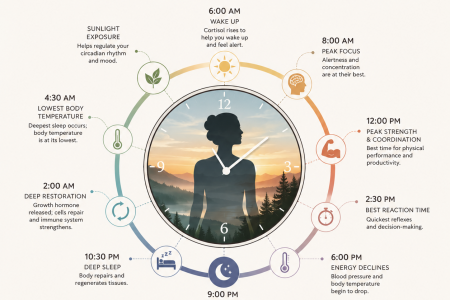
One of Yang Sheng’s oldest instructions eat and sleep in alignment with natural daily rhythms has a direct modern parallel in circadian biology. Studies on time-restricted feeding have shown that the body’s circadian clock regulates autophagy (the cellular “cleanup” process that clears damaged components), and that this circadian regulation plays a measurable role in how restricted-timing diets extend lifespan in animal models. This builds on earlier, well-established findings that fasting and time-restricted eating patterns aligned with the body’s natural rhythms support healthier lifespan outcomes. The mechanism is different from anything in classical Chinese texts, but the behavioral instruction don’t eat out of rhythm with your body’s clock is nearly identical to Yang Sheng’s seasonal and daily eating guidance.
The multisystem view of aging
A 2025 narrative review in the International Journal of Molecular Sciences examined longevity through what researchers call a systems lens, concluding that healthy aging emerges from the complex interplay of genetic, epigenetic, microbial, behavioral, and environmental factors with particular emphasis on how the brain and autonomic nervous system interact with epigenetic regulation, telomere dynamics, the gut microbiome, and environmental exposures to jointly shape biological aging. This “everything is connected” framing – mind, gut, environment, and body as one interdependent system is essentially a molecular-biology restatement of the Jing-Qi-Shen model, where no single treasure can be nourished in isolation.
Lorem ipsum dolor sit amet, consectetur adipiscing elit. Ut elit tellus, luctus nec ullamcorper mattis, pulvinar dapibus leo.
Where the science is still catching up
It’s worth being honest about the gap here too. A 2026 review in npj Aging concluded plainly that despite major advances, precise, validated recommendations for humans to reliably reach beyond 100 years remain elusive. Modern longevity science has strong evidence for directional practices — moderate eating, good sleep, stress reduction, movement but it hasn’t produced a single validated formula for maximum human lifespan. Yang Sheng never claimed to either; it offers a framework for daily practice, not a guaranteed number of years.
Where the Two Approaches Diverge
It’s worth being precise rather than reductive here Yang Sheng and modern longevity science aren’t the same thing wearing different clothes.
| Yang Sheng | Modern Longevity Science | |
|---|---|---|
| Foundation | Philosophical/energetic framework (Qi, Yin-Yang) | Mechanistic, cellular, and statistical evidence |
| Method of validation | Millennia of observed practice and classical texts | Peer-reviewed studies, demographic data, clinical trials |
| Primary goal | Balance and harmony with nature | Extending healthspan and delaying cellular aging |
| Individualization | Adjusted to person, season, and constitution | Increasingly personalized via biomarkers, genomics |
| Testability | Not empirically falsifiable in the scientific sense | Designed to be tested, replicated, and falsified |
Neither framework replaces the other. Yang Sheng offers a livable, daily structure refined over centuries of lived observation; modern science offers mechanistic explanations and rigorous validation but, as the npj Aging review notes, still lacks a definitive playbook. Used together, they’re complementary: philosophy for the “how to live,” biology for the “why it might work.”
How to Start a Yang Sheng Practice Today
You don’t need to overhaul your life to begin. Classical Yang Sheng is built on small, sustainable adjustments:
- Eat on a rhythm. Favor a substantial breakfast, moderate lunch, and lighter dinner eaten earlier rather than late at night.
- Match food to season. Warming, cooked foods in colder months; lighter, cooling foods in summer.
- Move daily, gently. A 20–30 minute walk, some Qigong, or Tai Chi counts more, over time, than occasional intense workouts.
- Protect your sleep window. Classical texts emphasize sleeping earlier in the evening to “restore essence” which lines up closely with what circadian research says about pre-midnight sleep and hormonal regulation.
- Build in stillness. Even five minutes of quiet breathing daily is treated as a legitimate health practice, not a luxury.
- Watch emotional extremes. Chronic anger, worry, or grief are treated in TCM as physiologically depleting not just uncomfortable feelings to push through.
Frequently Asked Questions
What is Yang Sheng in simple terms? Yang Sheng is a Traditional Chinese Medicine philosophy that means “nourishing life.” It focuses on preventing illness and supporting longevity through daily habits, diet, sleep, movement, and emotional balance rather than treating disease after it develops.
Is Yang Sheng scientifically proven? Yang Sheng itself is a philosophical and traditional framework, not a scientifically tested protocol. However, several of its core recommendations eating in rhythm with circadian cycles, moderate daily movement, stress reduction, and strong social connection are independently supported by modern longevity research, including studies on Blue Zones populations and circadian biology.
What are the three treasures in Yang Sheng? Jing (essence), Qi (vital energy), and Shen (spirit). Classical Yang Sheng theory holds that health depends on protecting and cultivating all three together.
How is Yang Sheng different from Traditional Chinese Medicine (TCM) overall? TCM includes diagnostic and treatment systems like acupuncture, herbal medicine, and cupping, generally applied to address a specific condition. Yang Sheng is the preventive, lifestyle-based branch of TCM — practiced daily regardless of whether you’re currently unwell.
Can Yang Sheng and Western medicine be used together? Yes. Yang Sheng is a lifestyle and prevention framework rather than a substitute for medical treatment. Many people use its daily practices — diet, movement, sleep, stress management alongside conventional healthcare rather than in place of it.
What’s the easiest way to start practicing Yang Sheng? Begin with one or two changes rather than a full overhaul: eat your last meal earlier in the evening, take a daily 20-minute walk, and protect a consistent, earlier bedtime. Classical Yang Sheng emphasizes small, sustained habits over dramatic short-term interventions.