Can Physical Therapy Help Strengthen Weak Legs?
If you feel like your legs are not as strong as before, you’re not alone.
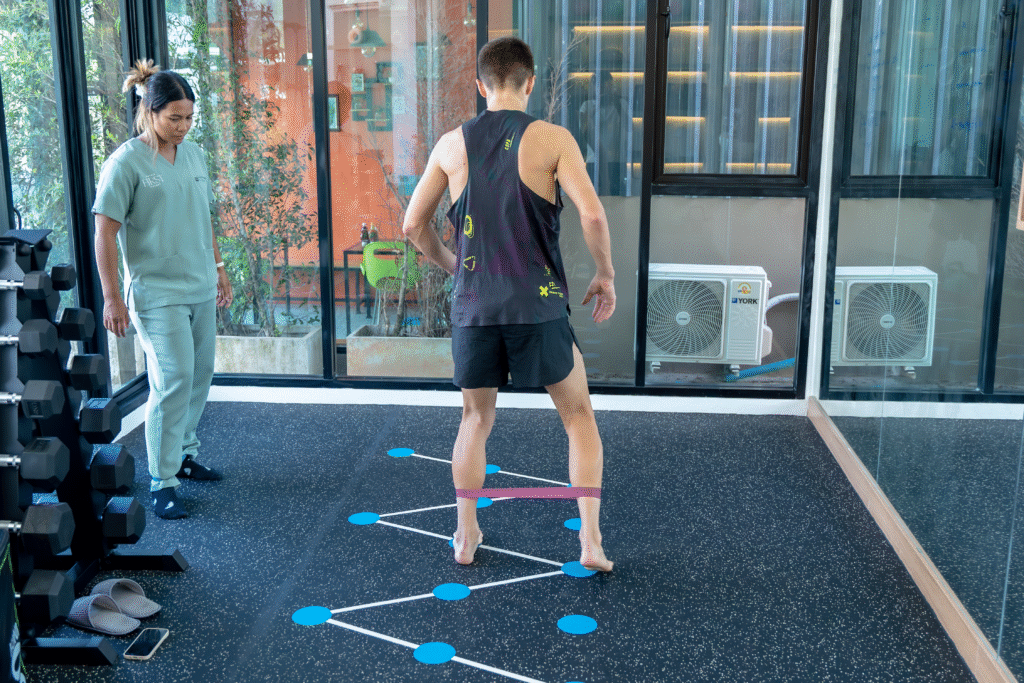
Most people don’t come to me saying, “I have weak legs.”
They come in saying:
“I can’t do the activities I used to love anymore.”
“My leg feels unstable.”
“I get tired so easily.”
“There’s always pain during or after activity.”
And in many cases, this starts after an injury or surgery. So the real question is not just:
Can physical therapy strengthen weak legs? The real question is:
Why did your legs become weak in the first place and what does your body actually need to recover?
It’s Not Just About Strength
Yes, physical therapy can strengthen weak legs. But if you think it’s just about doing exercises or going to the gym, that’s where most people get stuck. From my clinical experience, especially with post-injury and post-operation clients, recovery is about:
Movement quality
Pain response
Progressive loading
Timing
Lifestyle (sleep, nutrition, stress)
And even your mental readiness Strength is the result, not the starting point.
What “Weak Legs” Really Look Like In real life, weak legs are not just about muscle.
They look like:
– Pain when doing activities you love
– Not being able to perform like before
– Feeling unstable or unsure
– Getting fatigued easily
– Avoiding movement because of fear
– Pain during or after activity
This is why simply “doing more exercises” doesn’t fix the problem.

Real Case:ACL Injury and Return to Football
One of my clients was a football player with a complete ACL tear. After surgery, he followed a strengthening program on his own. But he got stuck. Physically? Not fully ready. Mentally? Not confident to go back to the field.
What we did differently:
– Measured both legs (injured vs non-injured) not the most important but still metter.
– Started with controlled strengthening
– Progressed into football specific movement
– Monitored his pain response (24–72 hours after training)
– Gradually added plyometric and high-load exercises At first, some movements caused pain—but it settled within 72 hours. That told us the body was adapting, not breaking. Step by step, his movement improved. His confidence improved. He returned to football practice in 9 months, instead of waiting a full year feeling unsure.
Real Case:ACL Injury and Return to Football
One of my clients was a football player with a complete ACL tear. After surgery, he followed a strengthening program on his own. But he got stuck. Physically? Not fully ready. Mentally? Not confident to go back to the field.
What we did differently:
– Measured both legs (injured vs non-injured) not the most important but still metter.
– Started with controlled strengthening
– Progressed into football specific movement
– Monitored his pain response (24–72 hours after training)
– Gradually added plyometric and high-load exercises At first, some movements caused pain—but it settled within 72 hours. That told us the body was adapting, not breaking. Step by step, his movement improved. His confidence improved. He returned to football practice in 9 months, instead of waiting a full year feeling unsure.
The Biggest Mistakes People Make
1. Waiting Until Pain Is Gone Many people think: “I’ll start rehab when I have no pain.” That’s a mistake. Waiting too long can make your leg weaker than you think, and recovery becomes harder.
2. Doing Too Much, Too Soon The opposite also happens. People feel a bit better and push too hard:
-Too many exercises
-Too much intensity
-No structure Then pain spikes again → inflammation → frustration.
3. Expecting Linear Progress Recovery is not a straight line. It goes up and down. Even on a “bad day,” you are often still stronger than day 1.
Understanding this prevents unnecessary fear and quitting too early. How I Approach Weak Legs (My Framework) Every client is different but my structure usually follows this progression:
1. Early Stage
– Reduce pain
– Restore basic movement
– Start gentle activation (don’t wait too long)
2. Mid Stage
– Build strength (bands → weights)
– Improve control and movement quality
– Start aligning exercises with real-life activity
3. Late Stage
– Plyometric training (jumping, dynamic movement)
– Increase load capacity
– Sport or activity specific training
4. Return to Activity
– Test readiness
– Build endurance
– Gradual return (not straight into full performance)
How to Know If Pain Is “Okay” or Not
This is one of the most important things patients learn.
✅ Acceptable pain:
– Pain stays the same during exercise (e.g. 3/10 → stays 3/10) – Pain settles within 24–72 hours This means your body is adapting.
❌ Not acceptable:
– Pain increases during each set – Pain keeps rising and doesn’t settle This means the body is not ready yet.
How to Know If Pain Is “Okay” or Not
This is one of the most important things patients learn.
✅ Acceptable pain:
– Pain stays the same during exercise (e.g. 3/10 → stays 3/10) – Pain settles within 24–72 hours This means your body is adapting.
❌ Not acceptable:
– Pain increases during each set – Pain keeps rising and doesn’t settle This means the body is not ready yet.
So… Can Physical Therapy Strengthen Weak Legs?
Yes, but not in the way most people think. It’s not just about exercises.
It’s about:
– Understanding your body
– Following the right progression – Managing pain correctly
– Building confidence again
– And giving your body enough time to adapt
My Honest Advice
If you’re not sure why your legs feel weak,don’t guess!.
Even if you’ve seen similar exercises online, your problem may not be the same.
Doing the wrong program can:
– Make pain worse
– Delay recovery
– Waste your time
The best thing you can do is:
– Get a clear assessment
– Follow a structured plan
– Understand your own body
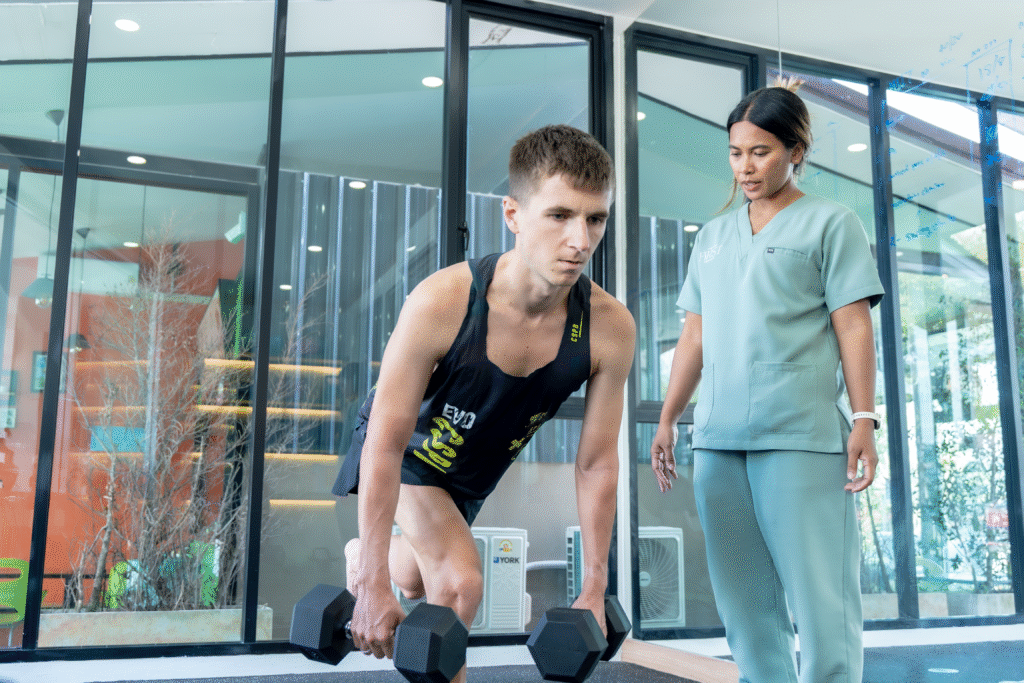
Recovery is not just exercise.
It’s your:
Sleep, Nutrition, Stress, Consistency And most importantly time.
There will be days you feel frustrated. Days you want to stop. But if you follow the right process, your body will adapt. And you will get back to what you love.
Author
Written by: Nurarmee Griffin
Physio First Phuket & TCM
Physiotherapy and Traditional Chinese Medicine clinic in Phuket specialising in physiotherapy, acupuncture, cupping therapy, dry needling, and rehabilitation treatments.
References
- American Physical Therapy Association – Physical therapy plays a key role in restoring strength, movement, and function after injury or surgery.
- National Health Service – Rehabilitation guidelines emphasize early movement, progressive exercise, and not waiting for pain to completely disappear before starting rehab.
- Journal of Orthopaedic & Sports Physical Therapy – Research supports progressive loading, movement retraining, and monitoring pain response (including 24–72 hour response) during rehabilitation.
- British Journal of Sports Medicine – Evidence on ACL rehabilitation highlights the importance of strength symmetry, plyometric progression, and criteria-based return to sport.
- World Health Organization – Physical activity, recovery, and lifestyle factors (sleep, stress, nutrition) all contribute to overall musculoskeletal health and recovery outcomes.