Office Syndrome: Why Desk Workers Develop Neck and Back Pain
Office syndrome is a common condition affecting people who spend long hours working at a desk, computer, or mobile device. It typically develops from prolonged sitting, poor posture, repetitive movements, and muscle tension. Many office workers experience symptoms such as neck pain, shoulder tightness, headaches, and lower back pain.
At Physio First Phuket & TCM, we regularly treat office syndrome using physiotherapy, acupuncture, and targeted rehabilitation techniques designed to reduce pain and restore healthy movement patterns.
What Is Office Syndrome?
Office syndrome refers to a group of musculoskeletal problems caused by prolonged desk work, poor ergonomic setup, and repetitive strain. It is particularly common among people who spend several hours per day using computers or mobile devices.
The condition primarily affects the neck, shoulders, upper back, and lower back, although it can also contribute to headaches, fatigue, and nerve irritation.
Without treatment, office syndrome can gradually worsen and lead to chronic pain or long-term postural problems.
.

Common Symptoms of Office Syndrome
Many desk workers experience symptoms that develop gradually over time. The most common symptoms include:
Neck stiffness and pain
Shoulder tension or tightness
Upper back discomfort
Lower back pain
Headaches or tension headaches
Reduced neck mobility
Tingling or numbness in the arms
Fatigue or muscle tightness after working
These symptoms often worsen after long hours at a desk or when posture is poor.
Why Desk Workers Develop Neck and Back Pain
Several factors contribute to office syndrome.
Poor Posture
When sitting at a desk, many people lean forward toward their computer screen or laptop. This posture places significant strain on the neck and upper back muscles, forcing them to work harder to support the head.
Over time, this can lead to muscle fatigue and chronic tension.
Prolonged Sitting
Remaining in the same position for long periods reduces blood circulation and increases pressure on the spine and surrounding muscles. This can lead to stiffness, reduced mobility, and discomfort in the lower back.
Laptop and Mobile Device Use
Working on laptops without proper screen height or frequently looking down at phones can create excessive strain on the neck. This is sometimes referred to as “tech neck.”
Repetitive Movements
Typing, mouse use, and repetitive tasks can create strain in the wrists, shoulders, and neck muscles, especially if the workstation setup is not ergonomically correct.
How Physiotherapy Can Help Office Syndrome
Physiotherapy is one of the most effective treatments for office syndrome because it addresses both the symptoms and the underlying cause of the problem.
At Physio First Phuket & TCM, treatment may include:
Postural Assessment
A physiotherapist will assess your posture, movement patterns, and workstation habits to identify the causes of strain.
Manual Therapy
Hands-on treatment helps release muscle tension, improve joint mobility, and reduce pain in the neck, shoulders, and back.
Rehabilitation Exercises
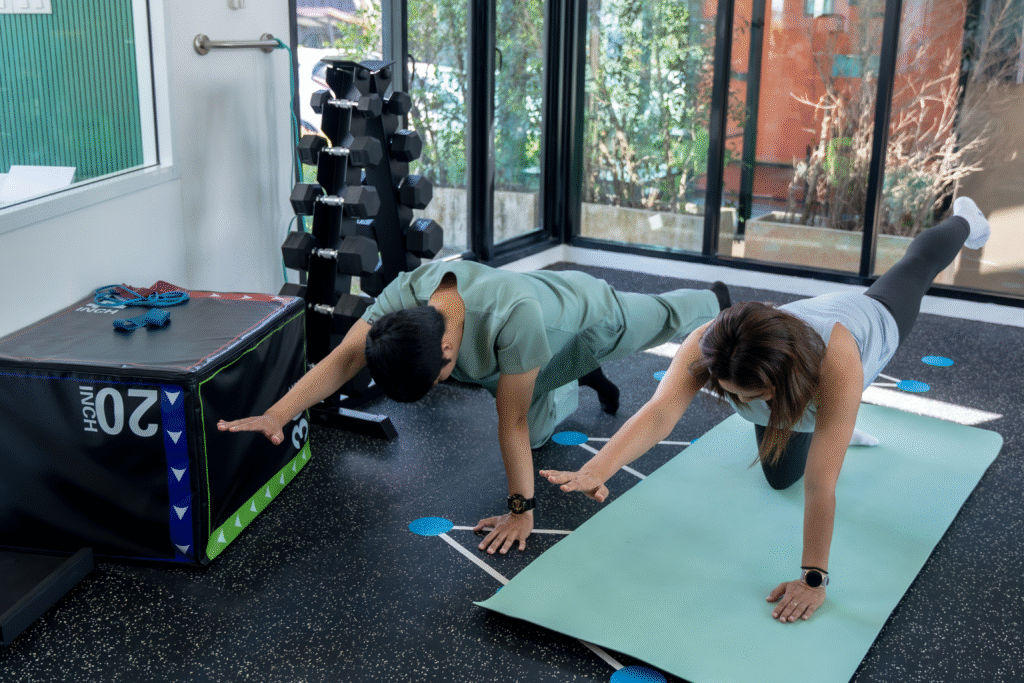
Targeted exercises strengthen the muscles that support the spine and improve posture.
Mobility and Stretching
Improving flexibility and mobility can reduce stiffness and restore healthy movement.
Dry Needling or Acupuncture
These techniques may be used to relieve muscle trigger points, reduce tension, and support pain relief.

Simple Tips to Prevent Office Syndrome
Small changes to your daily routine can significantly reduce the risk of developing desk-related pain.
Improve Your Desk Setup
Your computer screen should be positioned at eye level to avoid looking down for long periods.
Take Regular Movement Breaks
Standing up, stretching, or walking for a few minutes every hour can help reduce stiffness and improve circulation.
Strengthen Your Core and Back
Exercises that strengthen the core and upper back muscles help support better posture.
Avoid Prolonged Phone Use
Holding your phone at eye level instead of looking down can reduce strain on the neck.
When to Seek Treatment
If neck or back pain persists for more than a few days or continues to worsen, it may be helpful to consult a physiotherapist.
Early treatment can prevent symptoms from becoming chronic and help restore normal movement more quickly.
Many people find that physiotherapy significantly reduces pain and improves their ability to work comfortably.
Office Syndrome Treatment in Phuket
At Physio First Phuket & TCM, our team provides professional treatment for office syndrome using physiotherapy, acupuncture, dry needling, and rehabilitation exercises.
Our goal is to help patients reduce pain, improve posture, and return to comfortable, pain-free movement.
If you are experiencing neck pain, shoulder tension, or back pain from desk work, a physiotherapy assessment can help identify the cause and provide a personalised treatment plan.
Frequently Asked Questions
What causes office syndrome?
Office syndrome is usually caused by prolonged sitting, poor posture, repetitive desk work, and improper workstation setup.
Can physiotherapy help office syndrome?
Yes. Physiotherapy can reduce pain, improve posture, strengthen supporting muscles, and correct movement patterns that contribute to desk-related pain.
How long does office syndrome take to recover?
Recovery time varies depending on the severity of the condition. Many people notice improvement within a few physiotherapy sessions combined with posture corrections and exercises.
Is office syndrome serious?
Office syndrome is not usually dangerous, but if left untreated it can lead to chronic neck pain, back pain, and long-term postural problems.
Can acupuncture help office syndrome?
Acupuncture can help relieve muscle tension, reduce pain, and support recovery when combined with physiotherapy treatment.

References
-
National Institutes of Health – Musculoskeletal Disorders and Office Work
-
World Health Organization – Workplace Ergonomics and Musculoskeletal Health
-
American Physical Therapy Association – Posture and Workplace Injury Prevention
-
Journal of Occupational Health – Effects of Prolonged Sitting on Musculoskeletal Pain
Medical Disclaimer
This article is intended for educational purposes only and should not replace professional medical advice. If you are experiencing persistent pain or health concerns, please consult a qualified healthcare professional or physiotherapist.
Author
Written by: Nurarmee Griffin
Physio First Phuket & TCM
Physiotherapy and Traditional Chinese Medicine clinic in Phuket specialising in physiotherapy, acupuncture, cupping therapy, and rehabilitation treatments.